Posts

Showing posts with the label Yahuah

The Great Escape That Never Was: Debunking the Rapture Doctrine

For generations, a captivating story has been told in pulpits and on pages: the "Rapture." It’s a tale of believers vanishing in the blink of an eye, whisked away to safety before a period of immense earthly suffering.  It’s a comforting thought, an ultimate escape plan. But what if this popular doctrine is one of the greatest deceptions of our time—a "lie that is not in the Bible"? The recent failed predictions for September 2025 are just the latest in a long line of evidence that the pre-tribulation Rapture is a story that crumbles under scrutiny. Let's break down why this doctrine fails when tested against scripture, history, logic, and ethics. 1. The Biblical Evidence Simply Isn’t There Proponents of the Rapture often point to a few key verses, but a closer look reveals they've been stripped of their original context. 1   Thessalonians 4:16–17: This is the cornerstone text, describing believers being " caught up in the clouds to meet the Lord in th...

Was Yahusha Born in Ethiopia? Uncovering the Truth They Tried to Bury

Image
There’s a theory—often whispered, rarely spotlighted—that Yahusha (known to most of the world as Jesus) wasn’t born in Bethlehem of Judea, but in a cave in Ethiopia. Sounds wild, right? But like most things in history, when you start peeling back the layers, you begin to see that what we were taught might just be a carefully curated remix, courtesy of the Roman Empire. Let’s talk about it. The Africa Factor: More Than a Footnote Before anything else, let’s get one thing straight: Ethiopia is one of the oldest, most spiritually rich regions in the world. It wasn’t just a neighbor to ancient Israel—it was part of the conversation. The Bible constantly references Ethiopia (Cush), and we see powerful figures like the Queen of Sheba, Moses’s Ethiopian wife, and the Ethiopian eunuch who converted to the faith in the Book of Acts. Ethiopia also housed one of the earliest Christian communities on earth—long before Rome ever threw a cross on a building. The Ethiopian Orthodox Tewahe...

The Tenth Commandment: Thou Shalt Not Covet

Image
This commandment doesn’t police behavior—it pierces desire. It’s the final layer of the covenant, aimed directly at the heart. " Thou shalt not covet thy neighbour’s house... nor any thing that is thy neighbour’s." (Exodus 20:17) Desire Distorted Coveting is the quiet rebellion. It’s the inward craving for what was never yours to hold. That could be someone else’s relationship, status, influence, or favor. It’s not theft. It’s the seed of theft. The whisper that says, “Yahuah hasn’t given me enough.” This commandment exposes the root system. It forces us to confront envy, entitlement, and the hunger for someone else’s portion. It reminds us that sin begins in the imagination long before it touches the hand. Contentment Is Covenant To covet is to accuse Yahuah of withholding. It’s a rejection of His timing, His provision, and His wisdom. But contentment is covenantal. It’s the posture of trust—the quiet confidence that He knows what we need and when we need it. Pa...

The Ninth Commandment: Thou Shalt Not Lie

Image
This commandment protects the integrity of truth in every covenant. It’s not just about avoiding lies—it’s about refusing to distort, dodge, or rewrite reality. "Thou shalt not bear false witness against thy neighbour." (Exodus 20:16) Truth Is Covenant To lie is to fracture trust. It’s a betrayal of the bond between souls. Whether through gossip, flattery, omission, or exaggeration, falsehood erodes the foundation of community. Yahuah is truth. His Word is unshakable. When we lie—especially about someone made in His image—we’re not just misrepresenting them. We’re misrepresenting Him. This commandment calls for emotional honesty. It demands that we name things rightly, even when it’s uncomfortable. It confronts the revisionism that creeps into relationships—the subtle edits, the passive dodging, the false peace. The Weight of Our Words Words are sacred. They carry the power to build or destroy. Yahusha said, “ Let your ‘Yes’ be ‘Yes,’ and your ‘No,’ ‘No’” (Matth...

The Eighth Commandment: Thou Shalt Not Steal

Stealing is more than just taking what isn’t yours. It is a direct attack on trust, dignity, and the bonds that hold a community together. Just as the Seventh Commandment protects fidelity, the Eighth safeguards integrity. Without honesty, relationships collapse into suspicion and society decays into chaos. “ Thou shalt not steal .” (Exodus 20:15) Beyond Property When most people think of stealing, they picture money or possessions. But this commandment reaches further. To steal is to rob someone of what is rightfully theirs—whether it’s their labor, their reputation, or even their peace of mind. Employers who exploit workers, politicians who misuse power, or individuals who cheat in business are all guilty of breaking this law. Theft is not only about possessions—it’s about respect for people. The Spirit of the Law Like every commandment, this law begins in the heart. Yahusha reminded His followers that where our treasure is, our heart will also be (Matthew 6:21). Theft starts with gr...

The Seventh Commandment: Thou Shalt Not Commit Adultery

Image
Few wounds cut as deep as betrayal in love. The Seventh Commandment doesn’t just guard against a private act—it protects trust, family, and the very foundation of society itself. The fifth commandment shields the family structure, the sixth guards life, and now the seventh safeguards the sacred bond between a man and a woman. “ Thou shalt not commit adultery .” (Exodus 20:14) Protecting the Covenant Adultery is more than just a private act of infidelity. It is a fundamental betrayal of a public and sacred covenant. Marriage is the cornerstone of society, and this commandment is designed to protect its stability. When the covenant is broken, the ripple effect damages the family, children, and the entire community. This law is a direct reflection of the faithfulness of Yahuah. Since He is a covenant-keeping Elohim, He demands the same fidelity from His people in their most intimate earthly relationships. Adultery of the Heart Just like murder, the Law of Adultery begins not w...

The Sixth Commandment: Thou Shalt Not Murder

Image
We now move to the laws that govern our direct physical relationship with one another. The fifth commandment established the foundation of society in the family, and this one protects the most precious thing in that society: life itself. ​The Sixth Commandment is simple: " Thou shalt not kill . " (Exodus 20:13) ​However, the common English translation misses the powerful, specific meaning of the Hebrew. ​It Is Murder, Not Just Killing ​The Hebrew word used here is רָצַח (ratsach), written in Paleo Hebrew as 𐤓𐤑𐤇. This word specifically means "to murder"—the slaying of a human being with premeditation or malice. It is distinct from other words that mean "to kill" (like in war, self-defense, or by accident). ​By choosing ratsach, Yahuah established the sanctity of human life and reserved the right to take life for Himself. This commandment protects the victim from the malicious intent of the murderer. ​Murder of the Heart ​The law goes deeper than the phys...

The Fifth Commandment: Honor Your Parents

Image
We've now covered the commandments that deal with our direct relationship with Yahuah. With the fifth commandment, we shift our focus to how we are to treat each other, beginning with the very first human relationships we experience: our parents. This is the bridge between honoring Yahuah and honoring humanity. "Honour thy father and thy mother: that thy days may be long upon the land which Yahuah thy Elohim giveth thee." —Exodus 20:12 This commandment stands out for a unique reason: it's the first one that comes with a promise. Honor your parents, and you will have a long life in the land. This shows just how vital this law is, not just for individual well-being, but for the health and stability of society itself. What Does "Honor" Mean? "Honor" here means more than just simple obedience, especially for adults. It means to value, respect, and show high regard for our parents. It acknowledges the foundational role they play in our lives...

The Fourth Commandment: The Law of Rest

Image
We have arrived close to the halfway point of the Ten Commandments. The first three focused on our relationship with Yahuah . The fourth commandment acts as a bridge to the second part, which deals with our relationship with one another. ​This law is simple, but in our world, it is one of the hardest to obey. ​ "Remember the sabbath day, to keep it holy." —Exodus 20:8 ​The word " Remember " is key. It's not a new instruction; it's a call to return to something foundational. Yahuah first established the Sabbath at creation, after six days of work. He rested on the seventh day , setting the pattern for all of humanity. ​The Sabbath: Not Just for One Tribe ​The primary reason many churches dismiss this law is the claim that the Sabbath is "only for the Jews." This argument falls apart at the beginning. ​The Sabbath was established at the end of Creation Week (Genesis 2:2-3). At that time, there were no Jews, no Israelites, and no Law of Moses...

The Third Commandment: On the Power of a Name

In our journey through the Ten Commandments, we’ve covered a lot of ground. We’ve established who we are to worship and how we are to worship. Now, we come to a law that deals directly with the name of the Most High. And as we’ve already discussed, names carry weight. "Thou shalt not take the name of Yahuah thy Elohim in vain." —Exodus 20:7 For many, this commandment is simply a rule against using the name "God" as a curse word. And while that's certainly part of it, the true meaning of this law goes far deeper than just a sound. The Meaning of "In Vain" The Hebrew word for “in vain” is shav. It doesn’t just mean flippant or disrespectful. It means empty, false, worthless, or hollow. So, taking the name of Yahuah in vain is not just a verbal offense—it's a spiritual one. It's the act of using His name in a way that is empty of truth, void of His character, or for a false purpose. Consider what this really means: Using His Name for a False Purpo...

The First Commandment: More Than Just a Rule

Image
Welcome back. In my last few posts, we've talked a lot about names—how they matter, how they’ve been distorted, and the truth they carry. Now, I want to take that same energy and apply it to something even more fundamental: The Ten Commandments. Many people see the commandments as just a list of ancient rules. A moral checklist. But what if they’re something more? What if they are a spiritual X-ray, revealing the very nature of the Most High? The first commandment isn’t just a law. It's the foundation for all the others. It's the one we have to get right before anything else makes sense. "Thou shalt have no other gods before me." —Exodus 20:3 On the surface, it seems simple enough. Don’t worship other deities. But when we dig deeper, the meaning becomes so much richer, and so much more relevant to our lives today. The Reality of "Other Gods" For centuries, many of us have been taught that the other "gods" mentioned in the Bible weren't real...

The Real Yahusha

Image
"Jesus is love." That’s what they say, right? But somewhere along the way, that “love” turned soft. Hollow. Feel-good. Today, it’s been twisted to mean accept everything, affirm everyone, never correct, never confront. But the real Messiah? Yahusha wasn’t about that life. He didn’t come to pat sinners on the back. He came to call them out—and call them home. 🕊️ He Taught Love… But Not the Kind You Think Yahusha absolutely taught love—but it wasn’t the kind you find in Hallmark cards or pop songs. His love had boundaries, standards, and truth woven into every word. “If you love Me, keep My commandments.” — John 14:15 That’s not "love is love." That’s covenant love—obedient, disciplined, sacrificial. He didn’t say, “Live your truth.” He said, “I am the Truth.” Mercy Without Repentance? Never. Let’s be real. Yahusha forgave a woman caught in adultery—but He didn’t say “Keep doing you.” He said: "Go, and sin no more.” — John 8:11 His love didn’t coddle...

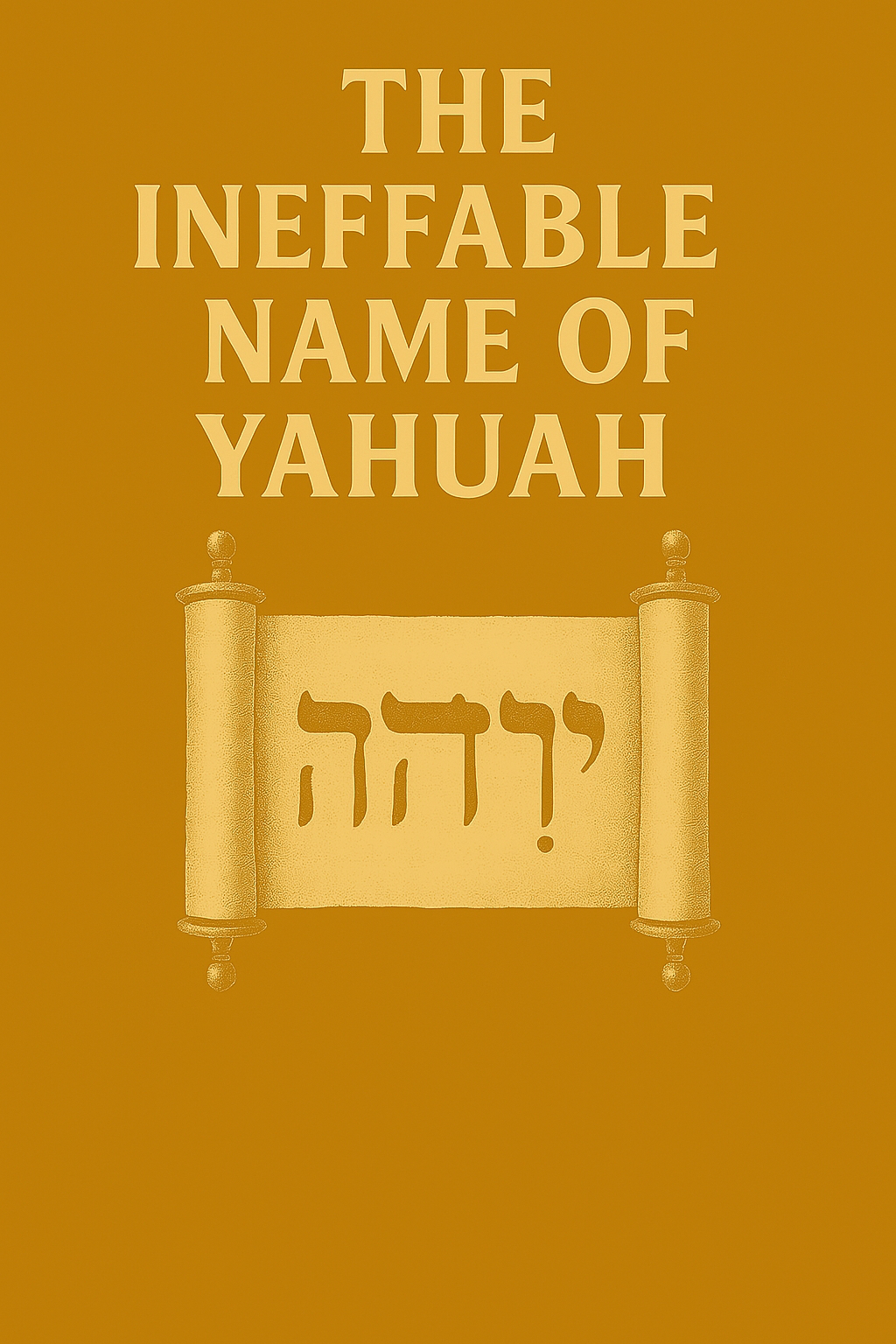
The Ineffable Name of Yahuah

Image
To expand a tad more on a previous blog regarding the ineffable name doctrine, for centuries, one of the most sacred truths was silenced under the weight of man-made tradition. The Ineffable Name Doctrine taught that the true name of the Most High, spelled YHWH (Yod-Hey-Uau-Hey) in Hebrew, was too holy to be spoken aloud. Instead, titles like "Adonai" (Lord) or "HaShem" (The Name) were substituted in scripture and worship. But here lies the problem: Who gave humanity the right to hide what Yahuah revealed? A Name Given, Not Hidden Scripture never instructs us to conceal the name of the Creator. In fact, His name is meant to be called upon, remembered, and declared: "And it shall come to pass, that whosoever shall call on the name of Yahuah shall be delivered." — Yo’el (Joel) 2:32 "I will declare Your name unto My brethren: in the midst of the congregation will I praise You." — Tehillim (Psalms) 22:22 The prophets knew it. Yahusha proc...

Unveiling Yahuah: Why the "Ineffable Name" Doctrine Misses the Mark

Image
For centuries, a pervasive doctrine has taken root in various religious traditions: the belief that the personal name of the Creator, YHWH, is too sacred to be uttered. Often referred to as the "ineffable name doctrine," this teaching has led to the substitution of the Divine Name with titles like "Lord" or "God." But what if this widespread tradition is a misunderstanding, one that actually obscures our understanding of and relationship with the Most High? This post will explore why the doctrine that the name Yahuah (YHWH) is too holy to be spoken is a human tradition, not a divine command, and ultimately diminishes our connection to the Creator. The Command to Proclaim, Not to Silence The very scriptures often cited for reverence actually contain direct contradictions to the idea of an unutterable name. Consider Exodus 3:15, a foundational verse where the  Creator reveals His identity to Moses: "And Elohim said moreover unto Moses, Thus ...

The Gospel According to Hollywood: How Racism Sneaked Into the Church’s Story

Image
Alright, let’s just say it: The Christian church has done some great things over the centuries—building communities, dropping wisdom, preaching love. But there’s a big shadow lurking in the background. Yeah, I’m talking about racism. It’s been deep, systemic, and sometimes quietly swept under the rug, but it’s always been there. 1. Yahusha (Jesus) Wasn’t Who Hollywood Painted Him To Be Every time you walk into a church or watch a biblical movie, who do you see? A pale, blonde-haired, blue-eyed Yahusha? That’s Hollywood’s version—safe, familiar, and frankly, way off. The truth? Yahusha was a Middle Eastern Jew, and by every historical and geographical account, he was darker-skinned, had textured hair, and all the rich melanin that comes with living under that Mediterranean sun. 2. The Prince of Egypt: The Subtle Art of Whitewashing I love The Prince of Egypt. The story is powerful, the music is iconic. But let’s be real—have you noticed Moses’s skin tone? He stays dark for m...